Want to be in the loop?
subscribe to
our notification
Business News
RULES FOR INSURANCE BUSINESSES IN VIET NAM
Licensing for insurance enterprises, foreign branches and insurance broker enterprises
To establish and operate an insurance enterprise, foreign branch or insurance broker enterprise, an investor must use their capital contribution in cash and not be financed by other organisations or individuals. Additionally, investors that are organisations contributing 10 per cent or more of the charter capital are required to have conducted a profitable business for three consecutive years before the year of licence submission, and to have not incurred cumulative losses prior to the submission.
Specific requirements for the establishment of insurance enterprises
To establish an insurance enterprise in Viet Nam, a foreign organisation must operate the business intending to engage in Viet Nam for at least ten years, and have total assets of at least US$2 billion in the year before the year of licence submission.
For Vietnamese organisations, the investor must have total assets of at least VND2 trillion in the year before the year of licence submission. In the case where an insurance joint stock enterprise is established, there must be at least two founding shareholders being organizations together holding at least 20per cent of the shares in the incorporated company.
Specific requirements for the establishment of insurance broker enterprises
In the case of the establishment of an insurance broker enterprise, a foreign organisation must have operated an insurance brokerage business for at least ten years. Additionally, it must not have seriously violated any insurance brokerage provisions in its country for three consecutive years before the year of licence submission.
Legal capital required for insurance business companies
The legal capital must be within the required range:
– VND300 - 400 billion for non-life insurance enterprises
– VND600 - 1,000 billion for life insurance enterprises
– VND300 billion for health insurance enterprises
– VND200 - 300 billion for foreign branches
– VND400 - 1,100 billion for reinsurance enterprises
– VND4 - 8 billion for insurance broker enterprises.
Insurance business enterprises' M&A
Once an insurance business enterprise conducts M&A activities, it must obtain approval from the Ministry of Finance (MOF) except for assignments of less than 10 per cent of charter capital. The MOF must approve applications within 30 days of receiving an eligible dossier.
Technical reserves and mandatory reserves
Technical reserves. An insurance business enterprise must set up technical reserves for each line of insurance or insurance contract respective to its liabilities. Subject to the type of insurance business enterprise, reserves comprise of reserves for unearned premiums, claim reserves, claim reserves for large loss fluctuations, profit sharing reserves, interest rate commitment reserves and others.
Compulsory reserve. An insurance enterprise, insurance broker enterprise or foreign branch must extract 5 per cent of its annual net profit to establish a compulsory reserve with the cap being 10 per cent of the enterprise charter capital or the foreign branch allocated capital.
Cross-border insurance services
To provide cross-border insurance services in Viet Nam, a foreign insurance enterprise must have total assets of at least US$2 billion, and an insurance broker enterprise must have total assets of at least $100 million in the fiscal year before the year that the cross-border insurance services are provided.
Funds for insured protection
An insurance enterprise or foreign branch (except for reinsurance enterprises) must contribute to a fund for insured protection ("Fund"). The highest contribution must not exceed 0.3 per cent of total premiums from primary insurance contracts retained by the insurance enterprise or the foreign branch in the fiscal year before the year the contribution is given. The contribution is made until the value of the Fund is equivalent to 5 per cent of the total assets of non-life insurance enterprises, health insurance enterprises and foreign branches, and to 3 per cent of the total assets of a life insurance enterprise.
The Decree takes effect on July 1, 2016 and replaces the Government Decrees No 45/2007/ND-CP and its amendments and No 46/2007/ND-CP.
Source: VIR
Related News
VIETNAM ECONOMY INVESTMENT
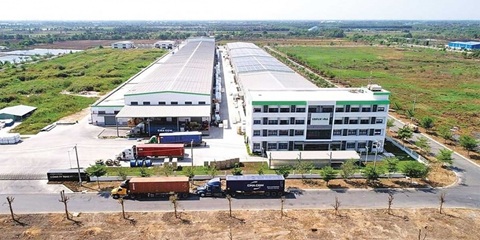
FOREIGN INVESTORS SEEKING A SYNCHRONISED MANUFACTURING ECOSYSTEM
Instead of focusing only on land costs and incentives as usual, foreign investors are seeking a synchronised manufacturing ecosystem, from stable power supply and logistics to shared infrastructure and the convenience of completing residence procedures for experts to serve their long-term investment in the country.
INFRASTRUCTURE / CONSTRUCTION / LOGISTIC / PORT
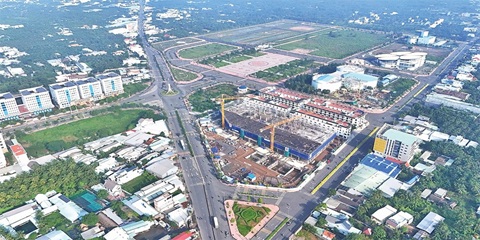
DONG THAP PROVINCE STEPS UP INDUSTRIAL EXPANSION AND INFRASTRUCTURE CONNECTIVITY
Accelerating public investment, strengthening inter-regional connectivity, and expanding industrial land are helping Dong Thap efficiently bolster competitiveness and drive economic growth. Following the 2025 merger of the former Dong Thap and Tien Giang provinces, the expanded Dong Thap province in the Mekong Delta faces mounting pressure to accelerate infrastructure development and strengthen connectivity among local economic zones, urban areas, industrial parks (IPs), and production centres.
PROPERTY / INDUSTRIAL ZONE
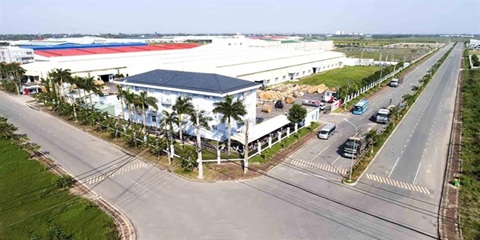
HCM CITY ATTRACTS US$5.7 BILLION INTO EXPORT PROCESSING AND INDUSTRIAL ZONES
HCM City attracted US$5.7 billion in domestic and foreign investment into its export processing and industrial zones during the first nine months of 2026. The figure exceeded the city's full-year target by 31 per cent, highlighting strong momentum in high-quality industrial investment under Resolution No.10-NQ/TW. Total investment reached 131 per cent of the 2026 target of $4.25 billion and represented a 29 per cent increase compared with the same period in 2025, according to the city's Export Processing and Industrial Zones Authority (HEPZA).

BANKING / FINANCE / INSURANCE / TAX
REMITTANCES TO HCM CITY RISE NEARLY 40% IN Q3
Remittances to HCM City reached more than US$2.83 billion in the third quarter of this year, up 39.5 per cent from the previous quarter and 3.6 per cent year-on-year. This was the first quarter showing positive annual growth this year, helping narrow the decline in remittance inflows over the first nine months. According to the State Bank of Vietnam (SBV)’s Regional Branch 2, remittances transferred to HCM City through credit institutions and economic organisations totalled $2.835 billion in Q3, an increase of more than $802 million from the previous quarter.

VIETNAM ECONOMY INVESTMENT
LOCALITIES REPORT BREAKTHROUGH RESULTS IN FDI IN FIRST NINE MONTHS
In Ho Chi Minh City, total registered capital reached $17.2 billion in the first nine months, up 4.2 times from the same period last year. The figure included more than $9.35 billion in newly registered capital and over $4.9 billion in additional capital for existing projects. Foreign investors also registered more than $2.9 billion through capital contributions and share purchases.

TECHNOLOGY
TECH SECTOR GROWTH OPENS UP OPPORTUNITIES FOR VIỆT NAM TO GO GLOBAL
The growth of the electronics, semiconductor and high-tech sectors worldwide is opening up a variety of opportunities for Vietnamese enterprises to integrate more deeply into the global supply chain. However, to become suppliers for these corporations, domestic enterprises must meet rigorous standards regarding quality, technology, productivity and order fulfilment capabilities.
Events Sponsors






















